
Family DIY Projects That Build Skills and Bring Everyone Closer
by Leslie Campos at wellparents.com
Busy parents juggling work, school schedules, and a never-ending home to-do list often want more family time, but don’t have the energy for plans that feel complicated. Family-friendly home improvement can solve that tension by turning everyday home DIY activities into shared, low-pressure moments where everyone contributes. With the right skill-building projects, kids, teens, and adults can stay engaged at the same time, each doing a part that fits. The payoff is practical confidence and real togetherness through projects.
Understanding What Makes a DIY Project Family-Friendly
At the heart of bonding DIY is a simple recipe: age-appropriate tasks, intergenerational learning, and clear roles. Good projects create a natural ladder of participation, so everyone can contribute safely and feel useful. They also invite intergenerational learning, where kids and adults trade know-how instead of one person doing it all.
This matters because skill-building sticks when people feel trusted and supported. Clear roles prevent power struggles and keep things moving when time is tight. Shared wins build confidence, and the house gets better without the project turning into a stress test.
Think of hanging a set of shelves. One person measures, another finds studs, a teen levels, and a younger child hands screws and marks lines. The task gets done, and everyone learns something real. That same structure makes a basic plumbing fix feel calm and teachable.
Make a Small Plumbing Fix a Safe, Confidence-Building Team Win
Once you know what makes a project truly family-friendly, everyday home fixes can become surprisingly positive practice. Simple plumbing repairs, like fixing a leaky faucet or unclogging a drain, are great hands-on projects that build practical skills and invite real teamwork across ages. One person can hold a flashlight, another can hand over parts, and someone else can keep track of what changed as you go, so everyone feels useful without the pressure of “getting it perfect.” When you do need to replace something or upgrade a worn-out piece, it also pays to source professional-grade plumbing supplies from a reputable supplier, so the materials match the job and the repair lasts. If you want a starting point, learning more on the topic of basic plumbing supplies can help you understand what you’re shopping for before you begin.
Pick One: 6 Hands-On Projects Families Can Start This Month
Pick a project that fits your energy and weekend time, not your “someday” skills. Use the same approach that made the plumbing fix feel doable: set simple safety boundaries, give everyone a role, and gather materials before you start so the work stays calm.
- Paint one bedroom wall (or the whole room) in a weekend: Start with a 20-minute family “prep sprint”: move furniture, cover floors, wipe the wall, and tape trim. Assign roles by age, someone cuts in edges, someone rolls big areas, someone does a final “drip patrol.” Painting is a confidence builder because you get visible progress fast, and it teaches planning (prep matters more than paint).
- Organize the garage so you can actually use it: Begin with three zones on the floor using painter’s tape: Keep here, Relocate, Donate/Trash. Work in 45-minute rounds so nobody burns out, and end each round by putting one category away (sports gear, tools, seasonal bins). A big motivator is how common the problem is; 47% of people surveyed said they couldn’t park in their garage, so you’re not alone, and the payoff is immediate.
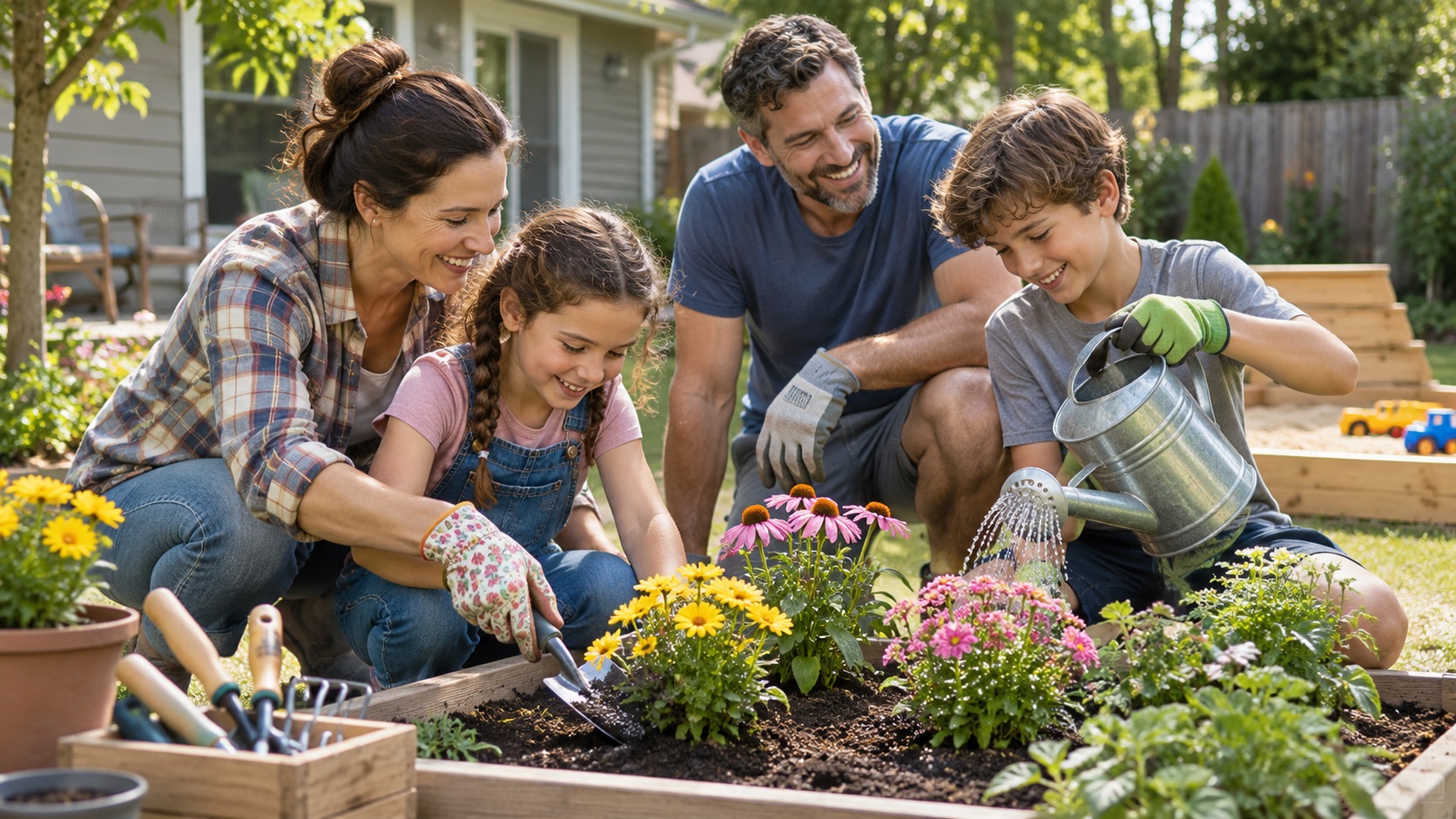
- Plant flowers and shrubs for a “low-effort, high-reward” upgrade: Walk the yard together and pick 2–3 planting spots that need color or privacy. Make it a skills station: one person measures spacing, one digs and loosens soil, one places plants and backfills, and one handles mulch and watering. This project teaches teamwork and patience, and it’s easy to scale, one bed today, another next weekend.
- Build a simple sandbox with a lid: Keep it beginner-friendly: a square frame, landscape fabric underneath, sand, and a basic cover to keep critters out. Let kids help measure boards, hold the square while you fasten, and fill sand with buckets, clear “hands away” rules when cutting or drilling, just like you did with plumbing. The win is a dedicated play zone that reduces random yard mess and gives everyone a tangible “we built this” moment.
- Create a cozy home theater corner (without a full remodel): Choose one wall, then plan a mini “signal path”: power, video, and sound with cords routed safely along edges (no trip hazards). Give someone the job of seating layout and sightlines, someone lighting (lamps or dimmable bulbs), and someone sound placement and cable management. The teamwork lesson here is systems thinking, everything works better when you plan the route before you plug things in.
- Build a treehouse or platform fort as a longer-term family build: Start small with a sturdy platform or fort “base camp” before you add rails, ladder, or roof. Break it into phases, design sketch, materials list, foundation/supports, platform, safety rails, so each weekend ends with something stable and safe. This is where roles really matter: a “materials runner,” a “level-checker,” a “fastener counter,” and one adult lead for cutting and ladders.
Family DIY Project FAQs (Safety, Time, and Momentum)
Q: What if I pick a project that is too hard for us?
A: Choose a “one weekend or less” version first, like one wall instead of a whole room. Do a 10-minute walkthrough and list only what you already know how to do plus one new skill. If the plan needs more than one new skill, scale it down.
Q: How do I keep kids safe without shutting them out?
A: Separate “helper jobs” from “power-tool jobs” and say it out loud before you begin. Kids can measure, sort hardware, hold a level, or do cleanup while an adult cuts and drills. Clear boundaries plus consistent eye protection rules keep it calm.
Q: What tools do we actually need for most beginner projects?
A: Start with basics you will reuse: a screwdriver set, a hammer, and a reliable tape measure. For many interior projects, measuring well prevents the most common do-overs.
Q: How can we fit DIY into a real schedule without it taking over?
A: Pick one recurring time block and protect it, even if it is just 45 minutes. A shared digital calendar helps everyone see the plan and reduces last-minute friction. End each session by resetting the space so the next start feels easy.
Q: What should we do when motivation drops halfway through?
A: Shrink the goal to a visible finish line like “prime one corner” or “label one shelf.” Take a quick photo of progress and choose the next tiny step before you stop for the day. Momentum comes from clean restarts, not big pushes.
Turn Simple DIY Projects Into Skills, Confidence, and Connection
Real life makes it easy for family projects to feel like one more thing, messy, time-consuming, and destined to fall short of the picture in your head. The steadier path is a motivational home improvement mindset: start small, choose progress over perfection, and keep encouraging teamwork so everyone has a role. Over time, the family project benefits add up, building skills and memories, more confidence with tools, and a home that reflects shared effort. Consistency beats perfection when building skills and memories as a family.